Why We Keep Selling Freedom Like It’s a Second-Hand Sofa
There’s a curious habit we humans have developed, and it’s becoming harder to ignore: we keep trading freedom for safety, like weary shoppers at a questionable car boot sale, bartering family heirlooms for a toaster that looks powerful but probably won’t survive a crumpet.
11/25/20254 min read
There’s a curious habit we humans have developed, and it’s becoming harder to ignore: we keep trading freedom for safety, like weary shoppers at a questionable car boot sale, bartering family heirlooms for a toaster that looks powerful but probably won’t survive a crumpet.
And much like these bargain-bin appliances, the “safety” on offer rarely performs as advertised. It hums reassuringly at first, then sparks at precisely the wrong moment.
Before we start wagging fingers at everyone else queueing up to surrender their civil liberties with a polite smile, perhaps we should ask the awkward question lurking underneath it all:
What, exactly, is freedom for?
Because if we can’t answer that, it’s hardly surprising people are flogging it off for the promise of stable Wi-Fi, a quiet life, and someone else dealing with the big scary decisions.
Freedom: Marvellous in Theory, Slightly Awkward in Practice
We talk about freedom as if it’s automatically wonderful. But pure, unfiltered freedom - “freedom from all constraint” - is a bit like being handed the keys to a Ferrari when you can’t drive and don’t particularly fancy going anywhere.
Technically impressive. Practically baffling. Emotionally stressful.
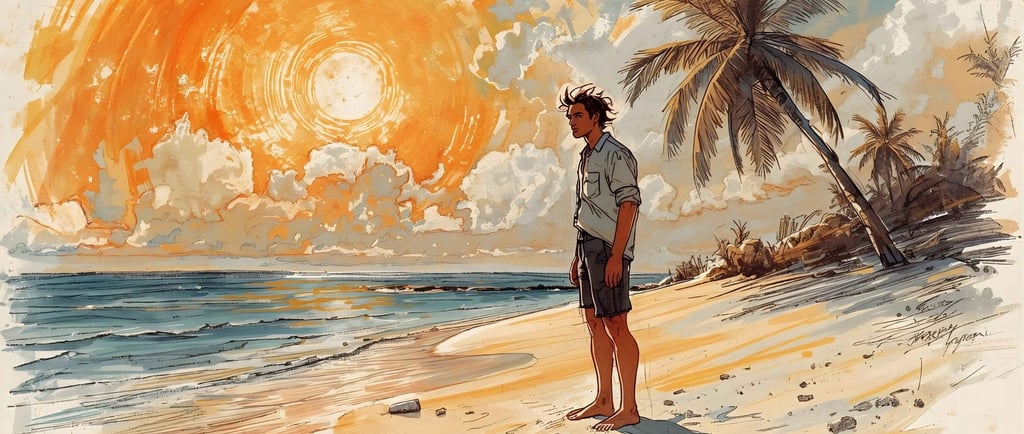
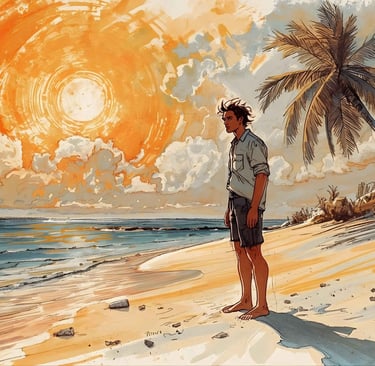
Imagine total freedom. No laws. No obligations. No aunt asking if you’ve “settled down yet”. Just you, an island, and infinite resources.
Go on then. What do you do?
You see the issue. Freedom on its own can feel less like liberation and more like being left alone in a massive supermarket at closing time with no shopping list and a mild sense of dread.
This is where the romantic fantasy of total liberty starts wobbling. With no direction, no meaning, no friction, freedom becomes odd, hollow, even paralysing. Like scrolling Netflix for forty minutes before surrendering and sticking The Office on for the sixth time…. again.
So If Not Just “Freedom From”, What Is It For?
This is where things get interesting, messy, and far more human.
Freedom to Become Who You Actually Are
The existentialists, cheerful bunch that they were, argued that we’re “condemned to be free”. Sartre insisted we cannot dodge responsibility for who we become. You can’t hide behind society, tradition, or advice columns without lying to yourself - what he called “bad faith”.
In simple terms: freedom is the space where you choose who you are, rather than sleepwalking into a life everyone else selected on your behalf.
Trouble is, that’s absolutely terrifying. Dostoevsky saw this clearly. The Grand Inquisitor suggests that humans don’t actually want freedom, they want certainty, authority, and someone to tell them what’s for tea.
And honestly? After a long day, that can feel quite reasonable.
Freedom means uncertainty. Responsibility. Choice. And the haunting realisation that if your life feels wrong, you may have played a role in building it that way.
Which explains reality television nicely, come to think of it.
Freedom to Flourish (Whatever That Means)
Aristotle believed freedom enables us to flourish - to reach our highest potential. Lovely idea. Slight snag: no one agrees what flourishing actually looks like.
Is it fulfilment? Pleasure? Service? Creating art? Raising children? Winning pub quizzes? Becoming unreasonably competitive at Monopoly?
Without agreement, “freedom to flourish” risks becoming a polite philosophical shrug.
Freedom to Discover
Perhaps the more honest position is this: we don’t fully know what makes a good life. So freedom exists so we can find out.
John Stuart Mill believed this deeply. Society, he argued, progresses by allowing people to try different ways of living, clash ideas together, and learn through experience.
A free society experiments. An authoritarian one standardises. Efficient, yes… until it isn’t. Like planting only one crop and hoping nothing ever changes. Spoiler: it always does.
Freedom, then, isn’t just niceness. It’s how civilisation thinks, adapts, and stays alive.
Freedom to Love (And Have It Mean Something)
Here’s a thought we often overlook: love only matters if it’s chosen.
A relationship enforced by fear isn’t devotion; it’s etiquette under duress.
The same applies to countries. Patriotism means something very different when you’re free to disagree, criticise, and even leave. Choosing to stay, to participate, to care… that has weight. That has dignity.
Compulsory loyalty is theatre. Real loyalty is voluntary.
The Uncomfortable Truth: Freedom Needs Some Boundaries
Here’s the paradox. Meaningful freedom doesn’t exist in total chaos.
You can’t explore who you are if you’re crushed by desperation. You can’t exercise autonomy if you’re manipulated or intimidated. You can’t speak freely if speaking costs you everything.
So liberty requires structure. Education. Stability. A baseline of security. The question is not “Should there be constraints?” but “Which constraints safeguard freedom, and which quietly strangle it?”
And this, predictably, is where everyone starts shouting.
Why Authoritarianism Sounds Tempting (Especially on a Tired Tuesday)
Authoritarianism offers a seductive deal:
We’ll handle the big decisions. You just get on with life.
No fuss. No mess. No complicated responsibility for the state of the world. You stay comfortable. We’ll stay in charge.
And if you’re juggling bills, children, deadlines and an intermittent boiler? That deal can sound surprisingly appealing.
But there’s a catch, of course. There always is.
Your private freedom only exists as long as the system permits it. No say in the rules means no guarantee they won’t change tomorrow. And when power goes wrong, as it so often does, you have no mechanism to correct it.
What Freedom Is Actually For
If I had to put it plainly, without the philosophical fanfare:
Freedom exists so people can shape lives that mean something to them, while leaving space for others to do the same, differently.
Not perfect lives. Not identical lives. But chosen ones.
It allows:
• Growth
• Dissent
• Experimentation
• Love
• Collective correction
• Dignity
It’s not neat. It’s noisy. It’s occasionally irritating. But it’s alive.
The alternative is obedience dressed up as stability.
The Slightly Hopeful Ending
Despite everything, humans are remarkably stubborn creatures. You can suppress them, manage them, frighten them - but extinguish them entirely? Good luck.
We question. We resist. We imagine. We rebel. We push against the fence just to see if it rattles.
Freedom survives not because it’s easy, but because it resonates with something fundamental in us. A refusal to live as ornamental furniture in someone else’s carefully arranged room.
We want to participate in our own existence. To matter. To choose. To ask “why?” even when the answer is inconvenient.
And that, inconvenient as it may be for tidy systems, is rather glorious.
Now, if you’ll excuse me, I’m exercising my freedom in the most British way possible: I’m making a cup of tea. Strong. No sugar. And absolutely no regime-approved brewing protocol.