What Is Freedom? A Question to Stir Your Soul and Spark Debate
Freedom… It’s thrown around in pub chats, protest chants, and quiet moments when you’re staring at the ceiling, wondering what life could be. But what does it really mean to you? We’re told we’re free to choose, but life often feels like picking from a pre-set menu.
10/27/20255 min read
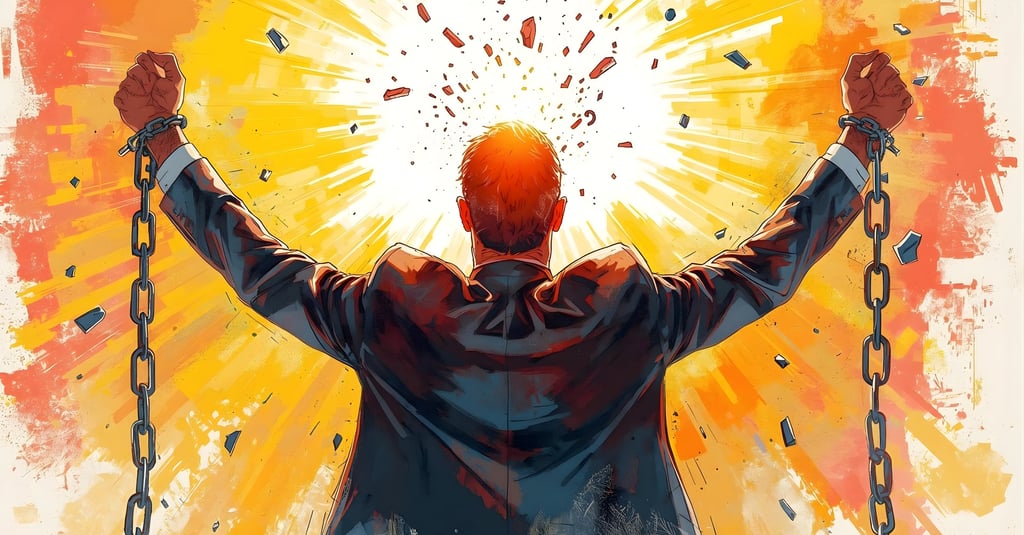
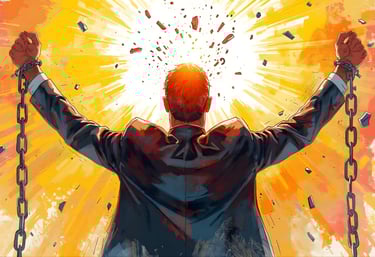
Freedom… It’s thrown around in pub chats, protest chants, and quiet moments when you’re staring at the ceiling, wondering what life could be. But what does it really mean to you?
Is it shaking off the boss’s orders, saying what you think without fear, or maybe just having enough cash to live on your terms? In a world where rules, especially around climate and money, seem to tighten daily, let’s dig into this: when you say “freedom,” what are you chasing? And is it still within reach?
The Big Idea: Freedom to Live, or Freedom from Control?
Philosophers have tussled with freedom forever, and one, Isaiah Berlin, split it into two kinds:
Negative freedom - being left alone, no government snooping, no society telling you how to act.
Positive freedom - being your own master, directing your life through self-determination and autonomy, like overcoming your impulses or ignorance to achieve what you truly want.
Sounds simple? But here’s the conundrum: can you have one without the other? If you’re free from rules but lack the tools or self-mastery to thrive, are you truly free? Or if you’ve got opportunities but someone’s always watching, dictating your moves, is that freedom at all?
Think about it: we’re told we’re free to choose, but life often feels like picking from a pre-set menu.
Jean-Paul Sartre, a French philosopher, said we’re “condemned to be free” - every choice we make shapes who we are, yet we dodge the big ones out of fear. So, what’s stopping you? What choice have you ducked lately because it felt too heavy? And do you need to be free from something before you can be free to become who you want? Berlin warned that positive freedom, if twisted, can justify forcing people "to be free" for their own good. This connects straight to today's arguments about governments acting like overprotective parents, stepping in to make decisions for us under the banner of knowing what's best.
John Stuart Mill, another Brit thinker, leaned hard on negative freedom with his harm principle: your liberty ends where it harms others. Swing your fist freely, but not at my nose. It's a solid rule for keeping society from overstepping.
The Political Fight: Whose Freedom Counts?
Politically, freedom’s a tug-of-war. Governments dangle it like a prize - free speech, free markets - but then slap on rules that feel like chains. Climate policies are a prime example. Low-emission zones in cities like London or Manchester fine you for driving an older car, all to cut pollution. Fair enough, you might say, clean air saves lives. But if you can’t afford a new car, it’s a tax on getting to work. Then there’s talk of “15-minute cities,” where everything you need is a short walk away. Sounds convenient, but some call it a trap, limiting how far you can go under the guise of saving the planet.
And don’t get started on the madness of curtailed energy. The UK has wasted more than £1 billion this year alone on turning off wind farms because the grid can’t handle the surplus power generated. We’re generating all this green energy - brilliant in theory - but without the infrastructure to store or distribute it properly, it goes to waste. Who foots the bill? Consumers, through higher energy prices to heat their homes. As Freddie New from Bitcoin Policy UK has pointed out in his tweets, imagine if that stranded surplus was channeled into something flexible like Bitcoin mining. It could turn waste into value, stabilising the grid without deep dives into taxpayer pockets. We’ll explore that more in a future post, but it raises questions about whether these “green” freedoms are empowering us or just costing us more.
Brexit’s another sore spot. The people voted for freedom - taking back control, sovereignty from Brussels, economic independence. But did it really happen? Not quite. We’re still tangled in trade deals, regulatory alignments, and customs checks that weren’t promised. The freedom to make our own laws? Sure, but immigration rules feel stricter for some, freer for others. And the economic hit of higher costs and supply chain woes has left many wondering if the liberty gained was worth the freedoms lost, like seamless travel or affordable imports. It’s a classic case: voting for one kind of freedom, only to find it curtailed by the realities of global ties.
Globally, the picture darkens. Developing nations, free from colonial rule, still drown in debt to richer ones, often tied to climate “aid” with strings attached. And in conflict zones, “security” justifies surveillance spikes, stifling dissent under freedom’s name. Politicians push ideas of freedom like dodgy second-hand car dealers, but buyer beware - what looks like a helpful green policy today could turn into a fancy trap tomorrow.
So, ask yourself: whose freedom matters most… the right to make your own choices every day, or the right to a stable world for everyone down the line? When rules are made for the “greater good,” do you feel freer, or just controlled? And what “freedoms” in your country feel more like slogans than reality?
Freedom Money: Who Controls Your Time and Energy?
Money’s the fuel of life, but it’s also a leash. It’s not just coins or notes, it’s an abstraction of your time and energy, your very existence. Every hour you work, every dream you chase, gets measured by this slippery thing called money. But when someone else controls it, say, bureaucrats or bankers printing more, inflating it away… they’re stealing your time, your energy, your life. Fiat money, the stuff governments churn out, is a rigged game. It’s a measuring stick that keeps changing length, and here’s why: governments create inflation by pumping more money into the economy faster than goods and services grow.
In simple terms, it goes like this: the government spends more than it earns, so it borrows by selling bonds (basically IOUs). The Bank of England buys those bonds, creating new money electronically out of thin air. This fresh cash floods in through spending, loans, or markets. Suddenly, more money chases the same stuff… so guess what? prices rise. Your savings buy less; your wages stretch thinner. It’s a system of misaligned incentives, where politicians distort value to fund pet projects or bailouts, keeping power concentrated.
Bitcoin offers a way out. It’s money no one can manipulate, inflate, or control with no central bank, no politician dipping into your pocket. It’s a fixed measuring stick, giving you back sovereignty over your time and energy. Stop letting bureaucrats siphon your life; protect yourself with Bitcoin.
So, what does financial freedom mean to you - Bitcoin’s promise of independence, or just not worrying about bills? If money is your life’s measure, who’s holding the tape? And could Bitcoin really free us all, or just a lucky few?
The Mirror of Freedom
Freedom isn’t a finish line; it’s a question you keep asking. In a world of climate rules, dodgy money systems, and endless debates, what freedom are you chasing? Not the loud promises of politicians, but the quiet choices that define you. What are you willing to fight for - your right to live as you please, or a world where everyone gets a fair shot?